Giant Jumble Crosswords
Just 2 FunWord
4.81.50K Reviews
- Version
- 3.2.1
- Installs
- 100.00K
- Age Rating
- Everyone
Screenshots
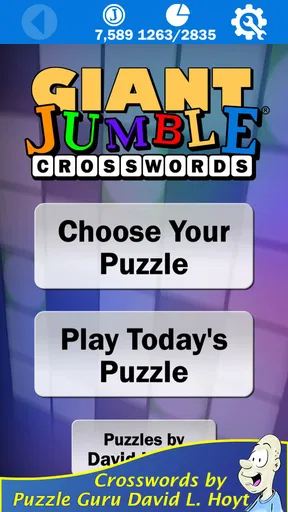
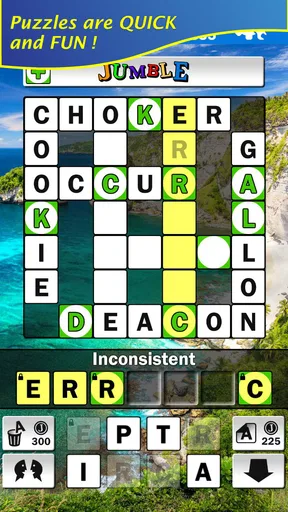
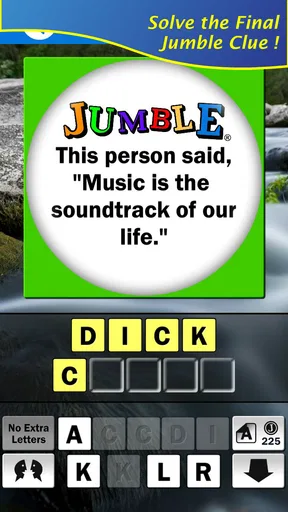
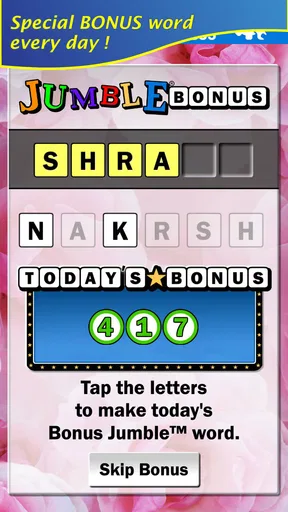
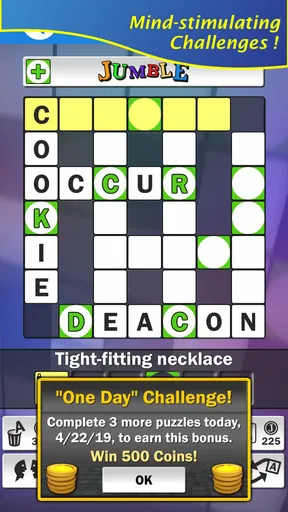
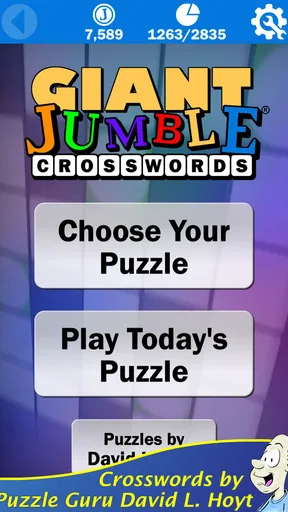
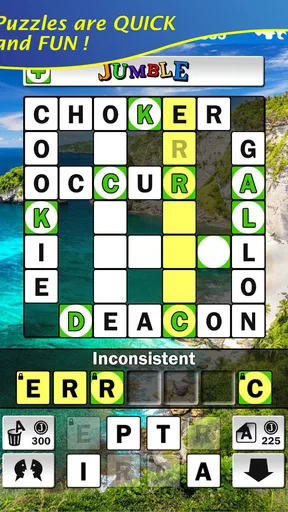
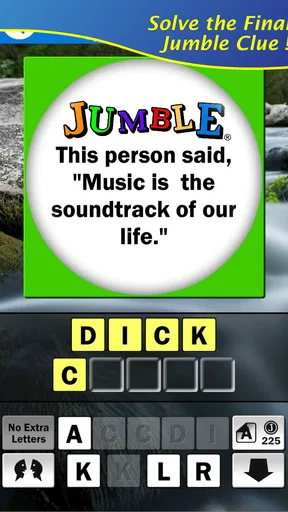
Our Review of Giant Jumble Crosswords
 Analysis by Appyee
I approached Giant Jumble Crosswords expecting a familiar word puzzle with a little more room to think, and that is exactly where it works best. This is a free word game from Just 2 Fun, built around Jumble-style crossword puzzles and associated with puzzle author David L. Hoyt. The basic appeal is easy to understand: solve clues, work through scrambled words, and enjoy the satisfying moment when separate answers begin to connect.
What makes it worth trying is not a complicated collection of modes or a long list of extras. It is the focused format. I can open it for a short mental break, solve a few clues without committing to a full gaming session, and leave feeling that I have done something more engaging than simply scrolling. It is rated for Everyone, so it is suitable for casual family play, although younger players may still need help with unusual vocabulary or clues that depend on general knowledge.
What the puzzle feels like when you first open it
The first thing to understand is that this is not a conventional crossword where every answer is entered directly from a clue. The Jumble element changes the rhythm. You are dealing with clues and scrambled word-solving, so progress comes from combining vocabulary, pattern recognition, and the ability to rearrange letters mentally. That mix gives the game a different personality from a standard newspaper crossword or a simple anagram app.
I found the large crossword format especially useful for keeping the puzzle visible as a whole. Instead of treating every clue as an isolated question, I could look for relationships between answers and use letters already placed to unlock a stubborn entry. That creates a natural chain reaction: one solved word gives me a letter, that letter narrows another answer, and the second answer makes the original puzzle feel less intimidating.
The game is best understood as a relaxed challenge rather than a speed test. Some clues fall into place quickly, while others require me to step away and return with a fresh perspective. That uneven pace is part of the enjoyment, but it also means the experience will not suit everyone. If you want rapid rounds, flashy rewards, or action between puzzles, this will probably feel too quiet.
The published average rating is 4.8 from around 3.6 thousand ratings, and the game has passed 100 thousand installs. Those figures suggest that the straightforward format has found a steady audience, but I would not treat popularity as a guarantee that every clue will match your vocabulary. Word games are personal: a puzzle that feels clever to one player can feel obscure to another.
Why the Jumble format changes the usual crossword routine
Traditional crossword apps often reward a broad knowledge base and careful use of crossing letters. A pure anagram game, by contrast, usually asks me to focus on one small group of letters at a time. Giant Jumble Crosswords sits between those experiences. I still benefit from crossing letters, but I also need to recognize how a scrambled answer might fit the clue and the surrounding structure.
That makes it a useful choice for players who enjoy wordplay but find ordinary crosswords either too formal or too dependent on obscure trivia. The scrambled-word layer gives me another route into a clue. Even when I do not immediately know the answer, I can sometimes make progress by studying the available letters and testing possible arrangements.
There is also a practical difference in how I use it. A daily newspaper crossword tends to become part of a fixed routine, while this game feels easier to pick up whenever I have a spare moment. I can use it during a quiet coffee break, while waiting for an appointment, or at home when I want a screen activity that does not demand constant attention.
Starting without making the first puzzle harder than it needs to be
Installation is uncomplicated for compatible devices. The game requires Android 6.0 or later, and the current version is 3.2.1. Once it is installed, I recommend resisting the urge to attack every visible clue in order. The first meaningful success comes faster when I scan for the shortest or most familiar-looking answers and use those as anchors.
My preferred opening routine is simple. I read through the clues once, identify anything that seems immediately recognizable, and solve those entries before spending time on a difficult phrase. Every confirmed answer gives the surrounding puzzle more structure. This is more effective than repeatedly staring at one stubborn clue with no supporting letters.
For a first-time player, the important distinction is between “I do not know this clue” and “I do not yet have enough letters.” Those are different problems. If the clue itself is unfamiliar, I may need to think about synonyms or a different meaning. If the clue seems clear but the answer will not form, I usually move elsewhere and return after the grid has supplied more information.
The game is free to download, which makes trying that first puzzle low-risk. It does include optional in-app purchases ranging from $0.99 to $9.99 per item. I would begin without buying anything and see whether the basic solving loop suits me. A word game only feels rewarding when the assistance, if used, supports my thinking instead of replacing it.
The first satisfying solve and how to reach it
The first successful action is not necessarily completing a whole crossword. For me, it is solving one scrambled answer, placing it correctly, and watching that answer make another clue more approachable. That small breakthrough teaches the central workflow better than any explanation: solve what you can, use the letters you gain, and let the puzzle gradually reveal its own structure.
I suggest starting with clues that have several possible answers only after some crossings are available. Entering a guess too early can send the rest of the puzzle in the wrong direction, especially when a short word has multiple common meanings. A more reliable approach is to wait until the clue and the crossing letters agree.
One useful habit is to treat the scrambled letters as a confirmation tool rather than the only source of the answer. If I can think of a word from the clue, I check whether its letters can be arranged from the available set. If the letters do not match, I do not force it. That prevents a common beginner mistake: becoming attached to an answer that sounds right but cannot belong in the puzzle.
Another helpful tactic is to alternate between clue-solving and grid-reading. I might spend a minute on the clues, then shift attention to the letters already placed. This change of focus keeps the experience from becoming repetitive and often exposes a word I missed when reading the clues alone.
Where new players may hesitate
The biggest early confusion is expecting the game to behave exactly like a normal crossword. The Jumble structure means that solving is partly about interpretation and partly about rearrangement. If I approach every entry as a direct definition, I miss half of the intended challenge. Once I accept that the clue and the letter arrangement must work together, the puzzle becomes much clearer.
Another point of friction is the temptation to use help too quickly. A difficult clue can feel like a dead end, but skipping immediately removes the chance to learn the puzzle’s vocabulary and style. I get more value by marking the problem mentally, solving two or three other entries, and then returning. The new crossing letters often turn an impossible-looking answer into an obvious one.
Players who are used to instant feedback may also find the pace slower than expected. There is no need to rush, and the game’s appeal depends on allowing a clue to sit for a while. I would not choose it for a short session when I specifically want constant wins. It is better when I am comfortable with a few uncertain moments between breakthroughs.
Vocabulary level can be another dividing line. The game is accessible in its general concept, but individual clues may still challenge children, casual players, or anyone who does not regularly play English-language word games. That is not a flaw unique to this title, but it matters when deciding whether it is suitable for shared play. I would happily use it with another adult, while a younger player may enjoy it more as a cooperative activity.
A realistic everyday way to use it
Imagine having fifteen quiet minutes before leaving for work. I could open the game, solve the obvious entries, and then spend the remaining time using the new letters to work through a few more. If I reach a clue that needs longer thought, I can stop without feeling that I have failed a timed round. The session still feels complete because I made visible progress.
That same flexibility works during a longer evening break. I might solve a section, put the phone down, and return later with the clue still in mind. Word puzzles often benefit from that pause because the brain continues making connections in the background. The game is therefore a better companion for intermittent attention than for players who want a single dramatic finish every time they play.
It can also work as a low-pressure shared puzzle. One person may be stronger at clues, while another is quicker at spotting letter arrangements. Taking turns with the same puzzle creates conversation without requiring competitive scoring or complicated rules. I would especially recommend that approach when one player finds the vocabulary challenging but still enjoys contributing ideas.
Small strategies that make a noticeable difference
My first non-obvious tip is to separate clue confidence from answer confidence. I may be very sure about the meaning of a clue but only moderately sure about the exact word. In that situation, I wait for crossing letters instead of committing immediately. This reduces wasted guesses and makes the grid more useful as a checking system.
Second, I try not to solve only from left to right or top to bottom. A large crossword rewards movement. Switching areas gives my attention a reset and increases the chance that an answer from one corner will provide the missing letter needed elsewhere. This is particularly helpful when several nearby clues use similar wording.
Third, I use the scrambled letters to test word families. If the clue suggests a noun but the available letters seem to form a related verb or adjective, I reconsider the grammatical role before blaming the puzzle. That quick check catches many errors caused by assuming the wrong form of a familiar word.
A fourth useful habit is to pause before spending assistance on a clue that has only one missing crossing. That final letter may arrive naturally after solving another entry, making the help unnecessary. I prefer to reserve any optional support for a genuinely blocked section rather than using it as part of every routine solve.
How it compares with other word-game choices
Compared with a standard crossword, this game feels more forgiving because scrambled words offer an additional path to an answer. It is still challenging, but I am not relying solely on trivia knowledge or a perfect first interpretation of the clue. For someone who likes crosswords but dislikes being completely stalled by one obscure entry, that balance is appealing.
Compared with a basic anagram game, the crossword structure adds purpose. I am not merely making words from letters; I am placing answers into a larger network where each solution can help another. That interconnected design gives the session more momentum and makes a correct answer feel more meaningful.
Compared with fast daily word games, the experience is less about a single compact challenge and more about sustained exploration. Players who enjoy a quick result every morning may prefer a smaller format. I would choose this one when I want a broader puzzle to revisit, especially if I enjoy seeing a grid gradually become readable.
Compared with competitive word apps, it is also a calmer option. The focus is on solving rather than comparing performance. That is a strength for relaxed play, but a weakness if leaderboards, head-to-head matches, or social pressure are the main reasons I play word games.
Who should try it, and who should pass
I think this is a strong fit for adults and older children who enjoy English wordplay, crossword fans looking for a slightly different structure, and casual players who want something they can pause easily. It is also a good choice for anyone who likes the feeling of gradually unlocking a puzzle instead of receiving a complete answer immediately.
I would be more cautious about recommending it to players who dislike clues with multiple interpretations, become frustrated when a solution is not immediate, or want a game built around rapid rounds. It may also be the wrong choice for someone seeking a broad collection of unrelated mini-games. Its identity is narrow and clear: Jumble-inspired crossword solving is the reason to install it.
The Everyone content rating makes it broadly approachable, but age suitability is not the same as equal difficulty. A child can understand the rules while still finding some vocabulary demanding. For family use, I would treat it as a cooperative word activity rather than assume that every younger player can solve it independently.
What to expect from the free version and continued play
Because the game is free, I can test the central puzzle experience before deciding whether it deserves a permanent place on my phone. That is important here because enjoyment depends heavily on personal tolerance for clue difficulty and repetition. I would play several sessions rather than judge it from one easy or one frustrating puzzle.
The optional purchases are worth approaching thoughtfully. I would not buy them simply because I am stuck once. First I would ask whether the clue is genuinely beyond my vocabulary, whether I have overlooked a crossing, or whether a short break would help. If assistance becomes a regular part of play, the value depends on whether it preserves the satisfaction of solving rather than turning the game into answer collection.
For ongoing use, I recommend treating each puzzle as a gradual project. Solve the confident entries, leave space for difficult clues, and return later. That workflow is more enjoyable than trying to force completion in one sitting, and it makes the larger crossword format feel like an advantage rather than an obstacle.
My recommendation after spending time with it
Giant Jumble Crosswords succeeds because it combines two familiar kinds of wordplay without making either one completely dominant. The crossword gives the puzzle structure, while the scrambled answers provide another way forward when a direct clue feels difficult. I like that it rewards patience, pattern recognition, and flexible thinking instead of demanding speed.
Its limitations are equally clear. The focused format will not satisfy players looking for action, social competition, or a constant stream of tiny victories. Some clues may also feel demanding when your vocabulary does not line up with the puzzle’s wording. Those are real considerations, not reasons to dismiss the game, and they make the choice easier: install it if you enjoy thoughtful word puzzles and can accept an occasional pause.
Just 2 Fun has made a free word game that is easy to begin but capable of holding attention beyond the first solve. I would recommend starting slowly, using early answers as anchors, and saving optional help for moments when the grid truly stops giving you useful information. If that patient, connected style of solving sounds satisfying, this is a friendly place to start.
Verdict
Strengths of Giant Jumble Crosswords
- Large puzzle selection keeps gameplay varied for regular players.
- Helpful hints make difficult clues more approachable.
- Clean interface makes grids easy to read on smaller screens.
- Progress tracking encourages players to complete more puzzles.
- Suitable for quick sessions or longer crossword-solving breaks.
Limitations of Giant Jumble Crosswords
- Some puzzles may feel repetitive for experienced crossword fans.
- Hints can reduce the challenge if used too frequently.
- A stable internet connection may be needed for certain features.
- Small text or controls may be uncomfortable on some devices.
- Ads can interrupt play unless removed through an optional purchase.
Other Releases by Just 2 Fun
View All
Just 2 Words
Word4.6

Just 2 Words Plus
Word4.6
Similar Picks in This Category
View All
Word Search - Word Puzzle Game
Bluetile4.8

Word Search Quest - Puzzles
Blackout Lab4.8

CodyCross: Crossword Puzzles
Fanatee, Inc.4.7

Words of Wonders: Crossword
Fugo Games4.9

Wordscapes: Word puzzle game
PeopleFun4.7

Word Search Explorer
PlaySimple Games4.9
Frequently Asked Questions
What is Giant Jumble Crosswords, and how does the game work?
Giant Jumble Crosswords combines traditional crossword solving with a word-jumble mechanic. Instead of simply entering answers into a standard grid, you work with scrambled letters and clues to discover the correct words. The large puzzle format gives you plenty to solve, making it suitable for players who enjoy vocabulary challenges, casual brain training, and longer sessions rather than very short daily puzzles.
Is Giant Jumble Crosswords suitable for beginners?
Yes, the game is generally approachable for beginners, especially if you already enjoy word games or crossword puzzles. The clues start with familiar concepts, although some puzzles can become noticeably more difficult as you progress. It helps to take your time, look for shorter answers first, and use any available hints when you are stuck. Players with limited crossword experience may need a little practice to become comfortable with the jumble format.
Can I play Giant Jumble Crosswords without an internet connection?
Offline availability can depend on the version of the app, your device, and how the game handles advertisements or optional online features. Many puzzle sections may remain playable once they have loaded, but some functions—such as downloading new content, syncing progress, displaying ads, or accessing special events—may require an internet connection. It is best to open the game online first and check which features remain available offline.
Does Giant Jumble Crosswords contain ads or in-app purchases?
The game may include advertising and optional purchases, as is common with free-to-download puzzle apps. Ads can appear between puzzles or during other parts of the experience, while purchases may provide hints, remove advertising, or unlock additional content, depending on the edition available in your region. Before downloading, review the store listing and purchase settings, particularly if children will be using the device.
What devices are compatible with Giant Jumble Crosswords?
Compatibility depends on whether you download the Android or iOS edition and on the operating system requirements set by the developer. Most relatively recent phones and tablets should provide a smooth experience, but older devices may have limited support, slower loading, or reduced performance. Check the official Google Play or App Store listing before installation to confirm the required operating-system version, available storage, and any device restrictions.
Play our best games!


